Cursive Numbers — How to Write Every Digit 0-9 in Script
Learn how to write all cursive numbers with our complete 0-9 guide. See every digit in 35+ calligraphy styles — perfect for wedding dates, anniversary tattoos, table numbers, and any design that needs elegantly scripted digits.
Text up to 35 characters per line (maximum 3 lines)
Number-by-Number Cursive Guide 0-9
Each of the 10 cursive numbers has a specific stroke pattern. Follow the numbered arrows below to master the formation of every digit.
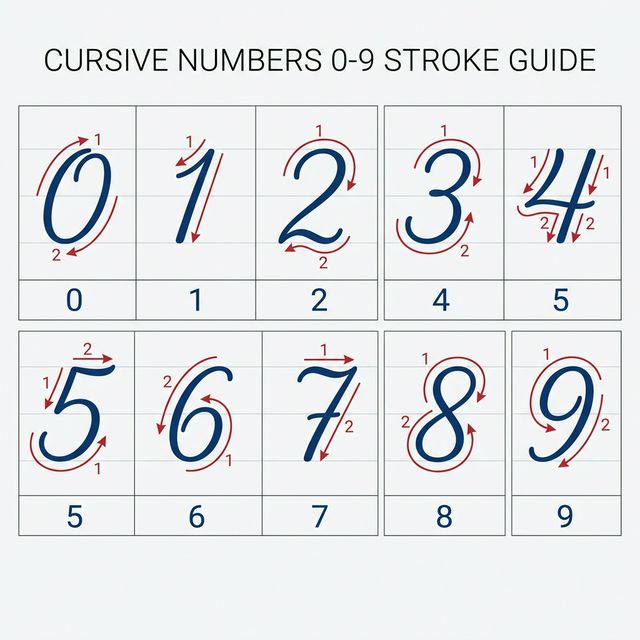
0 — Start top, oval down-left
1 — Hook up, straight down
2 — Curve right and down-left
3 — Two curves, right
4 — Down, right, then down again
5 — Down, curve right, top bar
6 — Curve from top-right down
7 — Right bar, then diagonal down
8 — Figure-eight from top
9 — Circle top, stroke down
Writing Dates in Cursive Numbers
One of the most popular uses of cursive numbers is writing dates for weddings, anniversaries, and memorials. Type any date into the generator above to preview it in script.
💒 Wedding Dates
Preview your wedding date in cursive numbers for invitations, save-the-dates, and ceremony programs. Try formats like "June 15, 2025" or "06.15.2025."
💉 Date Tattoos
Birth dates, anniversary dates, and memorial dates in cursive numbers make meaningful tattoos. Preview before you ink using the generator above.
🍽 Table Numbers
Elegant reception table numbers in cursive style add sophistication to any event. Generate numbers 1-20 to preview your table card designs.
Why Cursive Numbers Matter
While the cursive alphabet receives most attention in education, cursive numbers play an equally important role in handwriting mastery. Numbers appear in dates, addresses, math work, and countless everyday tasks — writing them in flowing script completes the full picture of cursive literacy.
Cursive numbers also serve significant design purposes. Wedding calligraphers spend years perfecting their number forms because dates are central to invitation suites. Event planners need cursive numbers for table assignments and programs. Tattoo artists must render digits as beautifully as letters. Our tool lets you preview all these applications instantly.
Commonly Confused Cursive Numbers
Just like some cursive letters look similar, several cursive numbers can be confused with each other:
- 3 vs. 5 — Both use curved strokes. In cursive numbers, the 3 is fully rounded while the 5 has a straight top bar and curved bottom
- 6 vs. 0 — A cursive 6 has a tail extending below the oval that distinguishes it from a 0. Practice both cursive numbers side by side
- 1 vs. 7 — Some cursive number styles add a horizontal crossbar to the 7 to prevent confusion with the 1
Teaching Cursive Numbers
Teachers typically introduce cursive numbers after students master the basic cursive alphabet. The transition is natural because many cursive number strokes use the same undercurves and overcurves found in cursive letters. Create number practice sheets with our worksheet generatorby typing digit sequences like "111 222 333" for focused repetition.
The History and Importance of Handwritten Numbers
Long before printed typefaces existed, every number was written by hand. Medieval merchants used flowing script digits in their ledgers, and Renaissance mathematicians developed the elegant notation systems we still use today. The cursive forms of our modern digits evolved through centuries of handwriting practice, with each culture adding its own aesthetic touches. Understanding this heritage helps explain why beautifully written numbers continue to carry such visual weight and emotional significance in modern design.
In the age of digital communication, handwritten numbers have become rare, which makes them even more impactful when used intentionally. A hand-lettered date on a wedding invitation signals care and craftsmanship that no computer font can replicate. A calligraphed table number at a formal dinner elevates the entire event experience. Our tool bridges the gap between the desire for handcrafted elegance and the convenience of digital tools.
Creative Projects Using Scripted Digits
Beyond the typical wedding and tattoo applications, scripted digits open up a world of creative possibilities. Scrapbook enthusiasts use elegant number forms to date photos and journal entries. Graphic designers incorporate calligraphed digits into logos and product packaging to add a premium, artisanal feel. Teachers create visually engaging math worksheets where the numbers themselves become works of art, making learning more engaging for young students. Even home decorators use large-format script numbers as wall art pieces, displaying meaningful dates or house numbers in elegant calligraphy.
Practicing Your Number Formation
Like letter formation, mastering digits in script requires deliberate practice. Start with the easiest digits first: zero, one, and six have the simplest stroke patterns. Then progress to moderately difficult digits like two, four, and seven. Save the trickiest digits for last: three, five, eight, and nine all require multiple strokes or direction changes that take time to master. Practice each digit individually for at least five minutes before attempting to write multi-digit combinations like dates or phone numbers.
Cursive Numbers FAQ
More Free Cursive Tools
Continue learning cursive.